
The pharmaceutical landscape in India is on the brink of a seismic shift as Danish pharmaceutical giant Novo Nordisk prepares to launch its blockbuster diabetes and weight-loss drug Ozempic India following regulatory approval from the Central Drugs Standard Control Organisation (CDSCO) on September 26, 2025. This groundbreaking development promises to transform the treatment landscape for millions of Indians battling diabetes and obesity, but it also raises crucial questions about safety, accessibility, and the potential risks associated with this powerful medication.
With over 101 million Indians living with type 2 diabetes and 254 million struggling with obesity, both numbers having doubled in the past decade, the arrival of Ozempic weight loss capabilities represents both unprecedented opportunity and considerable risk. As this “wonder drug” prepares to enter the world’s diabetes capital, understanding its implications has never been more critical for patients, healthcare providers, and policymakers alike.
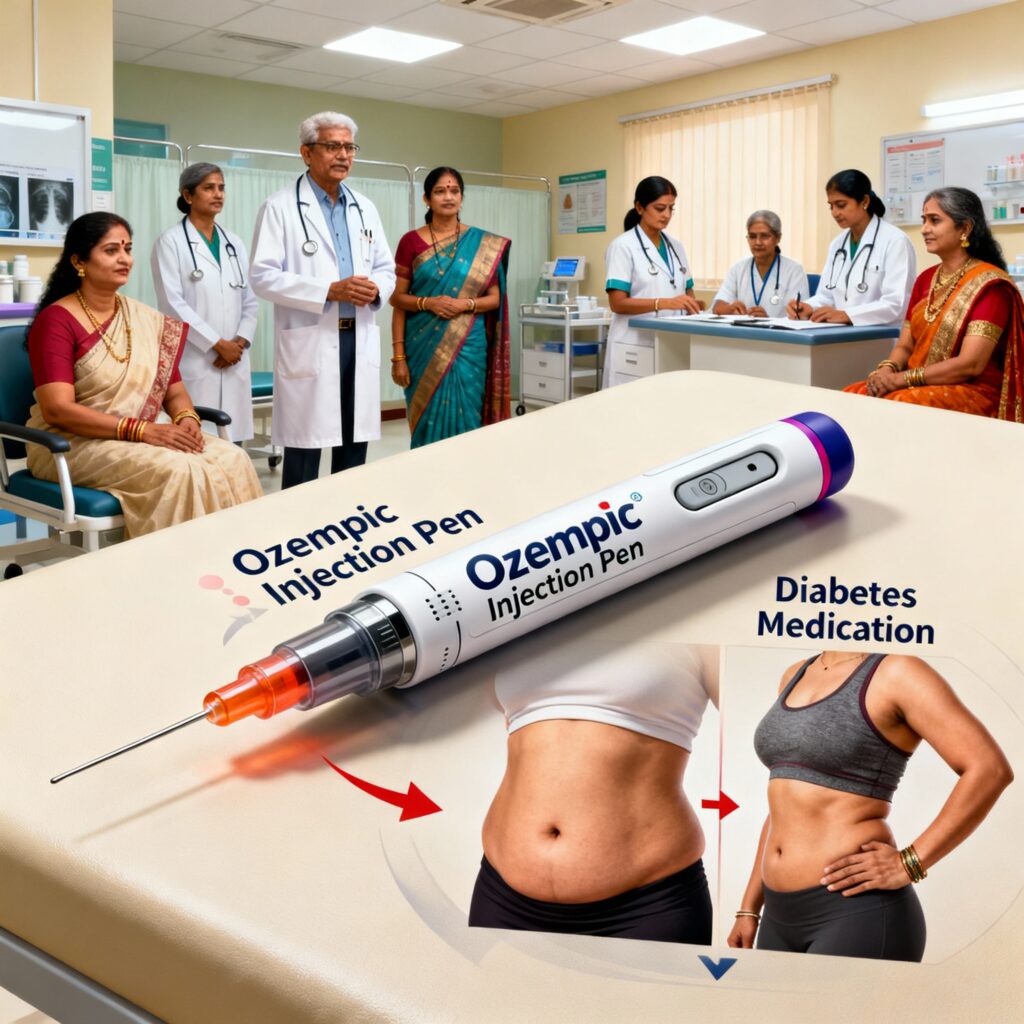
The Ozempic Phenomenon: From Diabetes Treatment to Weight Loss Revolution
Ozempic India represents the introduction of semaglutide, a GLP-1 receptor agonist that has revolutionised diabetes and obesity treatment globally since its FDA approval in 2017. Originally developed as a once-weekly injection for type 2 diabetes management, Ozempic gained international attention for its remarkable weight loss effects, leading to dramatic appetite suppression and significant weight reduction in users worldwide.
Global Success Story: Ozempic generated over $17 billion in global sales in 2024, making it the world’s biggest-selling diabetes medicine and establishing Novo Nordisk’s dominance in the GLP-1 market. The drug’s success stems from its unique mechanism of action; it mimics the natural hormone GLP-1, which is released after eating and signals the brain when to feel full, effectively reducing food intake and promoting weight loss.
Indian Market Timing: The timing of Ozempic India launch is particularly strategic, as India represents one of the largest untapped markets for diabetes and obesity medications globally. Vikrant Shrotriya, Managing Director of Novo Nordisk India, emphasised that “India is a key market for Novo Nordisk, and we strive to introduce best-in-class innovations for the people who need it the most”.
The drug works by activating GLP-1 receptors in multiple organs, increasing insulin secretion when blood glucose is elevated, reducing inappropriate glucagon release, slowing gastric emptying, and, at higher doses, suppressing appetite significantly.
India’s Diabetes and Obesity Crisis: The Perfect Storm
The launch of Ozempic India comes at a critical juncture as the country grapples with what experts term a “diabesity” epidemic, the dangerous convergence of diabetes and obesity that has reached unprecedented proportions.
Staggering Statistics: According to the International Diabetes Federation, India hosts approximately 90-127 million diabetics as of 2024, with an additional 127 million pre-diabetics at risk of disease progression. The obesity crisis is equally alarming, with 254 million Indians currently living with obesity, representing a significant portion of the population vulnerable to weight-related health complications.
Economic Burden: The financial impact of this health crisis is substantial, with diabetics in India spending a median of ₹13,179 annually on treatment. However, traditional diabetes medications often fail to address the root cause of type 2 diabetes in 90% of cases, excess weight and obesity. This treatment gap represents exactly where Ozempic’s weight loss capabilities become transformative, addressing both conditions simultaneously.
Market Opportunity: The Indian weight-loss drug market, currently valued at approximately ₹628-752 crores, is experiencing explosive growth with a compound annual growth rate (CAGR) of 46%, making it the fastest-growing therapeutic segment in Indian pharmaceuticals. Industry projections suggest this market could reach ₹546.70 million by 2033, growing at a CAGR of 23.54%.
Market Competition: The GLP-1 War Heats Up
The Ozempic India launch intensifies an already fierce competition in the Indian GLP-1 market between pharmaceutical giants Novo Nordisk and Eli Lilly, with significant implications for pricing, accessibility, and treatment options.
Current Market Leaders: Eli Lilly’s Mounjaro (tirzepatide), launched in March 2025, has quickly captured significant market share with sales of ₹98 crore within just four months of launch. The drug costs approximately $160 monthly and requires a prescription. Meanwhile, Novo Nordisk’s existing portfolio includes Wegovy for obesity management (launched in June 2025 with over ₹2 million in sales within three months) and oral semaglutide options.
Semaglutide Dominance: Currently, semaglutide-based products account for ₹421 crore of the total GLP-1 market valued at ₹606 crore as of July 2025, representing approximately 70% market share. This dominance positions Ozempic India advantageously, potentially completing Novo Nordisk’s comprehensive semaglutide portfolio in the country.
Patent Expiry Catalyst: A critical market shift awaits in March 2026 when semaglutide patents expire in India. This expiration will trigger the entry of generic manufacturers, potentially reducing prices significantly and making Ozempic weight loss treatments more accessible to broader population segments.
Serious Side Effects: The Dark Side of the Wonder Drug
While Ozempic weight loss benefits have captured global attention, mounting evidence reveals significant safety concerns that potential Indian users must carefully consider before treatment initiation.
Common Gastrointestinal Issues: Nearly half (48.6%) of semaglutide users experience adverse effects, with gastrointestinal symptoms being most prevalent. These include nausea (affecting up to 44% of users), vomiting, diarrhoea (8.6%), abdominal pain, constipation (5.7%), and appetite loss. While often mild to moderate, these symptoms can be severe enough to require treatment discontinuation in some patients.
Severe Health Complications: More concerning are the serious adverse effects documented in clinical studies and post-market surveillance. These include:
- Pancreatitis: Inflammation of the pancreas affecting 0.3-0.5% of users, with some cases requiring hospitalisation
- Gastroparesis: Stomach paralysis causing severe digestive disruption and potential nutritional complications
- Gallbladder Disease: Including gallstones affecting 2.6% of users in clinical trials
- Acute Kidney Injury: Particularly in patients experiencing severe dehydration from gastrointestinal symptoms
Vision-Threatening Complications: Recent research has identified a concerning association between semaglutide and Nonarteritic Anterior Ischemic Optic Neuropathy (NAION), a leading cause of blindness in adults. Studies show hazard ratios of 4.28 for diabetic patients and 7.64 for overweight/obese patients, representing a significantly elevated risk of sudden vision loss.
Psychological Effects: A 2024 European study analysing psychiatric adverse events found 481 psychiatric events associated with GLP-1 drugs, including depression (50%), anxiety (39%), and suicidal ideation (19.6%). While causality remains unproven, nine deaths and eleven life-threatening outcomes were reported during the study period.
Long-term Unknowns: Medical researchers emphasise that Ozempic weight loss drugs haven’t been studied in broader populations, meaning additional side effects may emerge as usage expands. The long-term health implications of chronic GLP-1 receptor agonist use remain largely unknown.
Accessibility and Affordability: The Indian Healthcare Challenge
The success of Ozempic India will largely depend on addressing the complex challenges of accessibility and affordability that characterise the Indian healthcare system.
Economic Barriers: Current GLP-1 therapies in India are expensive, with Wegovy costing approximately ₹16,000-17,000 monthly and Mounjaro around ₹12,800 monthly. For a median Indian household income, these costs represent a significant financial burden, potentially limiting access to affluent urban populations despite the broader need across socioeconomic strata.
Healthcare Infrastructure: India’s healthcare system faces significant challenges in chronic disease management, including limited specialist availability, inadequate monitoring systems, and uneven geographic distribution of healthcare resources. Successfully deploying Ozempic weight loss treatments will require substantial healthcare provider education and monitoring infrastructure development.
Generic Competition Promise: The March 2026 patent expiry offers hope for improved accessibility, as Indian generic manufacturers typically offer medications at 70-90% discounts compared to branded alternatives. Companies like Dr Reddy’s Laboratories and other domestic manufacturers are already preparing generic semaglutide versions for market entry.
Clinical Evidence: Efficacy and Real-World Outcomes
The clinical foundation supporting Ozempic weight loss applications rests on extensive global trial data, though Indian-specific studies remain limited.
Weight Loss Efficacy: Clinical trials demonstrate that semaglutide can produce 15-20% body weight reduction in obese patients when combined with lifestyle interventions. For the average overweight Indian adult, this could translate to 15-25 kg weight loss over 12-18 months of treatment.
Diabetes Management: Beyond weight loss, Ozempic India offers significant benefits for diabetes control, including HbA1c reductions of 1.5-2.0%, reduced insulin requirements, and decreased risk of diabetes complications. The cardiovascular and kidney protection benefits are particularly relevant for Indian patients, who often present with advanced diabetes complications.
Long-term Sustainability: Questions remain about long-term weight maintenance after Ozempic weight loss treatment discontinuation. Studies suggest that many patients regain weight when stopping GLP-1 therapy, raising questions about lifetime treatment requirements and associated costs.
Economic Impact: Market Transformation
The introduction of Ozempic weight loss therapies is poised to reshape India’s pharmaceutical and healthcare economics significantly.
Market Size Projections: The domestic GLP-1 receptor agonist market, valued at $110.55 million in 2024, is projected to grow at a 34.3% CAGR through 2030, nearly twice the global growth rate. Goldman Sachs estimates the global anti-obesity drug market could reach $95 billion by 2030, with India representing a substantial portion of this growth.
Healthcare Cost Implications: While Ozempic India represents significant upfront costs, successful diabetes and obesity management could reduce long-term healthcare expenditures related to complications like cardiovascular disease, kidney disease, and stroke. Health economic modelling suggests potential healthcare savings of ₹50,000-100,000 per patient over 10 years through complication prevention.
Patient Safety and Medical Guidelines
As Ozempic weight loss becomes available, establishing robust safety protocols and medical guidelines becomes paramount for Indian healthcare providers.
Screening Protocols: Patients require comprehensive screening for contraindications, including personal or family history of thyroid cancer, pancreatitis, kidney disease, and psychiatric conditions, before Ozempic India initiation.
Monitoring Requirements: Regular monitoring of kidney function, pancreatic enzymes, blood glucose levels, and weight loss progression is essential. Healthcare systems must develop protocols for identifying and managing serious adverse effects promptly.
Patient Education: Comprehensive patient education about realistic expectations, side effect management, and lifestyle modification requirements is crucial for treatment success and safety.
Conclusion: Navigating the Promise and Peril
The arrival of Ozempic India represents a watershed moment in the country’s battle against diabetes and obesity, offering unprecedented therapeutic potential while presenting significant risks that demand careful consideration. With over 355 million Indians potentially benefiting from diabetes and obesity treatments, the stakes could not be higher.
The promise is compelling: a once-weekly injection that can simultaneously control diabetes and produce substantial Ozempic weight loss effects, potentially transforming the lives of millions struggling with these interconnected conditions. The global success story, with $17 billion in sales and millions of satisfied patients, provides encouraging precedent for Indian implementation.
However, the risks are equally substantial. Serious side effects, including pancreatitis, stomach paralysis, vision loss, and psychological complications, affect a minority but significant number of users. The long-term implications of chronic GLP-1 therapy remain unknown, particularly in India’s diverse population with unique genetic and environmental factors.
For patients considering Ozempic India, the decision requires careful consultation with trusted healthcare providers who can assess individual risk-benefit profiles, establish appropriate monitoring protocols, and provide comprehensive support throughout treatment. The “wonder drug” label, while appealing, should not overshadow the importance of informed medical decision-making.
The launch of Ozempic India indeed represents a game-changer for diabetes and obesity treatment, but whether it proves to be a health breakthrough or gamble will ultimately depend on how thoughtfully patients, providers, and policymakers navigate its complex implications in the months and years ahead.