
In a diplomatic breakthrough that would have been unthinkable just years ago, India has dramatically reset its relationship with Afghanistan’s Taliban government, marking a seismic shift in South Asian geopolitics. External Affairs Minister S. Jaishankar’s historic meeting with Taliban Foreign Minister Amir Khan Muttaqi on October 10, 2025, represents the highest-level India Taliban diplomatic engagement since the group’s return to power in 2021, fundamentally altering the regional balance of power and challenging decades of established diplomatic norms.
The unprecedented visit culminated in India’s announcement to upgrade its technical mission in Kabul to full embassy status, a move that signals New Delhi’s pragmatic approach to regional realities while strategically positioning itself against Pakistani influence in Afghanistan. This India Taliban diplomatic reset comes at a crucial juncture when Taliban-Pakistan relations have deteriorated dramatically, creating an opportunity for India to fill the strategic vacuum and pursue its Central Asian connectivity ambitions through Afghan territory.
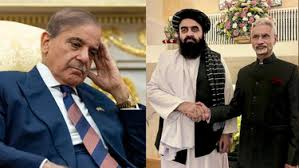
What makes this diplomatic engagement particularly significant is its timing and context. The Taliban, under UN sanctions with travel bans on key officials, secured a rare exemption for Muttaqi’s eight-day visit to India, a clear indication of both sides’ commitment to this new relationship. For India, this represents a calculated risk that balances realpolitik with its broader strategic objectives in the region. At the same time, for the Taliban, it offers crucial legitimacy and economic opportunities beyond their traditional Pakistani allies.
The Embassy Upgrade: India’s Strategic Diplomatic Gambit
The centrepiece of the India Taliban diplomatic breakthrough is India’s decision to upgrade its technical mission in Kabul to full embassy status, marking a dramatic reversal from its position when the Taliban first returned to power. This decision represents more than mere diplomatic protocol; it signals India’s recognition of ground realities in Afghanistan and its determination to maintain strategic influence in a region where China and Pakistan have been making significant inroads.
From Technical Mission to Full Embassy: India’s diplomatic presence in Afghanistan has undergone multiple transformations since the Taliban’s 2021 takeover. Initially, India closed its embassy entirely when Kabul fell, but reopened a limited technical mission in June 2022 focused primarily on humanitarian assistance and supervising aid distribution. This technical mission served as a face-saving measure that allowed India to maintain some presence while avoiding formal recognition of the Taliban government.
The upgrade to full embassy status represents a calculated escalation that falls short of formal recognition, yet significantly enhances bilateral engagement capabilities. As Jaishankar announced during the meeting, “India is fully committed to the sovereignty, territorial integrity, and independence of Afghanistan. Closer cooperation between us contributes to your national development, as well as regional stability and resilience”.
Strategic Implications: The embassy upgrade positions India alongside countries like China, Russia, Iran, Pakistan, and Turkey that maintain diplomatic missions in Kabul, though notably, Russia remains the only country to formally recognise the Taliban government. The timing of this announcement is particularly significant as it comes amid deteriorating Pakistan-Taliban relations, with Pakistan’s recent airstrikes on alleged Pakistani Taliban positions in Afghanistan severely straining bilateral ties.
Counter-Terrorism Cooperation: A Pragmatic Security Partnership
Perhaps the most significant aspect of the India Taliban diplomatic engagement is the development of counter-terrorism cooperation between two entities that were previously adversaries. This cooperation represents a fundamental shift from the 1990s, when the Taliban provided sanctuary to Pakistani terrorists targeting India, including those responsible for the 1999 Indian Airlines hijacking.
Taliban’s Security Assurances: During the meeting, Muttaqi provided explicit assurances that Afghanistan would not allow any group to use its territory against India or any other country. “We always sought good relations with India. We will not allow any group to threaten anyone else or use the territory of Afghanistan against others,” Muttaqi declared, marking a dramatic departure from the Taliban’s previous stance.
These assurances carry particular weight given recent developments. The Taliban condemned the April 2025 Pahalgam terrorist attack in Kashmir and reached out to Indian officials during the operation, demonstrating their commitment to not allowing anti-India terrorist activities from Afghan soil.
Joint Counter-Terrorism Framework: The discussions established a framework for coordination against common terrorist threats, particularly ISIS-K (Islamic State Khorasan Province) and other transnational terrorist groups operating in the region. Both countries face security challenges from these groups; ISIS-K has conducted attacks against Taliban forces while also posing threats to Indian interests in the region.
For India, Taliban cooperation in counter-terrorism efforts provides crucial intelligence about terrorist networks operating in Afghanistan and their potential connections to groups targeting Indian interests. The Taliban’s commitment to preventing Afghan territory from being used against India represents a significant strategic gain for New Delhi’s security establishment.
Economic Opportunities: Mining, Trade, and Infrastructure Development
The India Taliban diplomatic reset has opened substantial economic opportunities that were previously inaccessible due to political constraints. Afghanistan’s vast mineral wealth, estimated at over $1 trillion, presents particularly attractive opportunities for Indian companies seeking to diversify their resource base and reduce dependence on traditional suppliers.
Mining Sector Opportunities: During the meeting, Muttaqi specifically invited Indian companies to explore mining opportunities in Afghanistan, acknowledging India’s technical capabilities and investment potential in this sector. Afghanistan possesses significant deposits of lithium, copper, iron ore, gold, and rare earth elements, resources that are increasingly crucial for India’s renewable energy and technology sectors.
The Taliban’s invitation to Indian mining companies represents a strategic shift from their previous reliance on Chinese investment in this sector. China has been the primary foreign investor in Afghan mining, including a major copper mining project at Mes Aynak. India’s entry into this sector would provide the Taliban with alternative partners while giving India access to critical minerals needed for its economic development.
Infrastructure and Development Projects: India is committed to resuming and expanding its development cooperation with Afghanistan, including maintenance and completion of previously initiated projects. Jaishankar announced support for earthquake reconstruction efforts and pledged continued assistance in healthcare, education, and infrastructure development.
The provision of 20 ambulances and medical equipment during Muttaqi’s visit symbolizes India’s commitment to humanitarian assistance while building goodwill with the Afghan population. The resumption of direct flights between Delhi and Kabul, facilitated by the diplomatic reset, enhances people-to-people connections and trade relationships.
Pakistan Factor: Capitalising on Taliban-Islamabad Tensions
The India Taliban diplomatic breakthrough has been significantly facilitated by the dramatic deterioration in Pakistan-Taliban relations, creating an unprecedented opportunity for India to reshape regional dynamics to its advantage. This triangular relationship shift represents one of the most significant geopolitical developments in South Asia in recent years.
Pakistan-Taliban Relations Unraveling: The relationship between Pakistan and the Taliban, once considered unbreakable, has deteriorated rapidly over the past year. Pakistan accuses the Taliban of providing sanctuary and support to the Pakistani Taliban (TTP), which has conducted increasing attacks on Pakistani security forces from Afghan territory.
The situation reached a critical point when Pakistan conducted airstrikes on alleged TTP positions inside Afghanistan in December 2024, followed by additional strikes in October 2025 that reportedly targeted areas near Kabul. The Taliban’s defence ministry issued strong warnings against these attacks, threatening consequences if Pakistani military actions continued.
Taliban’s Strategic Pivot: The Taliban’s decision to engage with India represents a strategic pivot away from exclusive dependence on Pakistan. During his visit to India, Muttaqi issued pointed warnings to Pakistan from Indian soil, demonstrating the Taliban’s willingness to publicly criticise their former patron.
This shift is particularly significant because Pakistan was instrumental in the Taliban’s rise to power and served as their primary external supporter during their insurgency against the US-backed Afghan government. The current tensions suggest that the Taliban now views excessive dependence on Pakistan as strategically limiting.
India’s Strategic Advantage: India has skillfully capitalised on these tensions by offering the Taliban an alternative regional partnership that doesn’t come with Pakistan’s baggage. Unlike Pakistan, India doesn’t have territorial disputes with Afghanistan, doesn’t harbour ambitions to control Afghan policy, and offers substantial economic opportunities without political strings attached.
Central Asian Connectivity: The Chabahar-Afghanistan Corridor
One of the most strategically significant aspects of the India Taliban diplomatic reset is its implications for Central Asian connectivity through the Chabahar-Afghanistan corridor. This route represents India’s ambitious attempt to access Central Asian markets and energy resources while bypassing Pakistani territory, a long-held strategic objective that has gained new viability through improved Taliban relations.
The Chabahar Port Project: India’s development of Iran’s Chabahar Port serves as the cornerstone of its Central Asian connectivity strategy. This port, located on Iran’s southeastern coast along the Gulf of Oman, provides India with direct maritime access to Iran and, through Iranian territory, to Afghanistan.
The port’s significance extends beyond bilateral India-Iran trade. It serves as India’s gateway to Afghanistan and potentially to Central Asian republics, offering an alternative to the traditional route through Pakistan that has been repeatedly disrupted by bilateral tensions.
Afghanistan as the Bridge: Afghanistan’s geographic position makes it the crucial link between the Chabahar Port and Central Asian markets. The India Taliban diplomatic breakthrough potentially unlocks this connectivity by ensuring Taliban support for transit arrangements and infrastructure development necessary for efficient trade flows.
During the discussions, Muttaqi expressed Taliban support for the Chabahar corridor, recognising its importance for Afghanistan’s economic development and regional integration. This represents a significant shift from previous Taliban positions that were influenced by Pakistani opposition to Indian connectivity projects.
For India, the Chabahar-Afghanistan corridor provides access to Central Asian energy resources, particularly natural gas and oil from Turkmenistan and other regional suppliers. For Afghanistan, the corridor offers crucial access to maritime trade routes that don’t depend on Pakistani cooperation.
Geopolitical Calculations: Balancing Realism and Values
The India Taliban diplomatic engagement presents complex challenges in balancing realpolitik calculations with democratic values and human rights concerns. This tension has been evident throughout India’s approach to the Taliban, reflecting broader dilemmas faced by democracies in dealing with authoritarian regimes that control strategically important territories.
The Recognition Question: India has carefully avoided formally recognising the Taliban government while significantly upgrading practical engagement. This approach allows India to pursue its strategic interests while maintaining principled positions on issues like women’s rights, minority protection, and democratic governance.
External Affairs Minister Jaishankar’s formulation, expressing support for Afghanistan’s “sovereignty, territorial integrity, and independence” rather than explicitly endorsing the Taliban government, reflects this careful balance. India joins countries like China and Iran that maintain substantial diplomatic relations with the Taliban without formal recognition.
Human Rights Concerns: The Taliban’s restrictions on women’s rights and freedoms have created significant diplomatic challenges for India’s engagement. The controversy over female journalists being excluded from Muttaqi’s press conference in Delhi highlighted these tensions, drawing criticism from Indian civil society and media.
India’s approach has been to privately raise human rights concerns while publicly focusing on areas of mutual interest like counter-terrorism, trade, and regional stability. This pragmatic approach prioritises engagement over isolation while maintaining pressure for improved human rights practices.
Strategic Pragmatism: India’s willingness to engage with the Taliban reflects a broader strategic pragmatism that prioritises national interests over ideological consistency. This approach recognises that isolating the Taliban has not improved human rights conditions in Afghanistan while potentially ceding strategic space to competitors like China and Pakistan.
The decision to upgrade embassy relations despite human rights concerns reflects India’s assessment that engagement offers better prospects for influencing Taliban behaviour than isolation. This calculation assumes that sustained diplomatic and economic engagement can gradually moderate Taliban positions on social issues.
Regional Security Implications: The Bagram Base Question
The India Taliban diplomatic reset has significant implications for regional security architecture, particularly regarding US demands for access to Afghanistan’s strategic Bagram Airbase and broader counter-terrorism operations in South Asia.
Trump’s Bagram Demand: US President Donald Trump’s demand for continued American access to Bagram Airbase, located just north of Kabul, has created a significant test for Taliban sovereignty and regional diplomatic alignment. The Taliban’s firm rejection of this demand has been explicitly supported by India, marking a rare instance of Indo-US disagreement on regional security matters.
India’s support for Taliban sovereignty over Bagram represents a strategic calculation that prioritises regional stability and Taliban legitimacy over traditional US alliance considerations. This position aligns with India’s broader support for Afghan territorial integrity and independence.
Counter-Terrorism Architecture: The India-Taliban counter-terrorism cooperation discussions have implications for the broader regional security architecture. Both countries face threats from ISIS-K, Al-Qaeda affiliates, and other transnational terrorist groups that require coordinated responses.
India’s engagement with the Taliban creates new possibilities for intelligence sharing and coordinated counter-terrorism operations that don’t rely on US or Pakistani intermediaries. This bilateral security cooperation could prove more effective than multilateral frameworks that have been complicated by competing strategic interests.
Conclusion: A Pragmatic Reset with Strategic Implications
The India Taliban diplomatic breakthrough represents one of the most significant geopolitical developments in South Asia in recent years, fundamentally altering regional dynamics and challenging established diplomatic conventions. India’s decision to upgrade its Kabul mission to embassy status while developing comprehensive cooperation frameworks with the Taliban demonstrates sophisticated strategic thinking that prioritises long-term interests over short-term ideological consistency.
This diplomatic reset succeeds because it serves the strategic interests of both parties while addressing practical regional challenges. For India, the engagement provides enhanced regional connectivity, improved counter-terrorism cooperation, access to Afghan natural resources, and reduced Pakistani strategic advantages. For the Taliban, it offers crucial legitimacy, economic opportunities, and strategic alternatives to excessive dependence on Pakistan and China.
The timing of this diplomatic breakthrough, coinciding with deteriorating Pakistan-Taliban relations and evolving regional power dynamics, demonstrates India’s ability to capitalise on strategic opportunities while maintaining principled positions on core issues. The careful balance between engagement and endorsement allows India to pursue practical cooperation while avoiding compromising positions on human rights and democratic governance.
However, the success of this diplomatic reset will ultimately depend on both countries’ ability to translate agreements into concrete deliverables. Economic cooperation must move beyond symbolic gestures to substantial commercial partnerships. Counter-terrorism cooperation must produce tangible security benefits. Infrastructure and development projects must create visible improvements in Afghan living conditions.
The broader regional implications of this diplomatic shift extend beyond bilateral India-Taliban relations to influence the entire South Asian strategic landscape. Pakistan’s reduced influence in Afghanistan, combined with India’s enhanced regional connectivity and counter-terrorism cooperation, represents a significant shift in regional power dynamics that could have lasting implications for peace and stability in South Asia.
The historic nature of Jaishankar’s meeting with Muttaqi, the first high-level diplomatic engagement between India and the Taliban since 2021, marks the beginning of a new chapter in Afghanistan’s international relations and India’s regional strategy. Whether this chapter leads to sustainable cooperation or eventual disappointment will depend on both countries’ commitment to managing the inherent tensions between strategic interests and principled positions while delivering concrete benefits to their respective populations.