
When Italian Prime Minister Giorgia Meloni walked into the Gaza Peace Summit in Sharm El-Sheikh as the only woman among 30 world leaders, she became an unwitting case study in how the world still fundamentally misunderstands women leaders gender bias. Within hours, viral moments from the summit dominated headlines, not about her diplomatic positions on Middle East peace, but about Donald Trump calling her “beautiful,” Turkish President Erdogan advising her to quit smoking, and her facial expressions throughout the event.
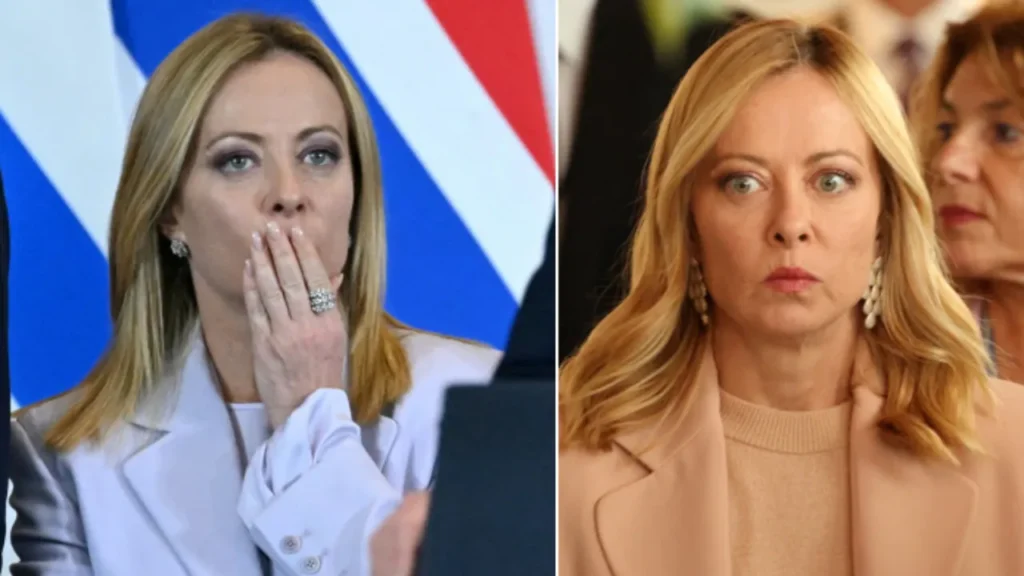
This pattern represents a systemic problem that extends far beyond a single summit or one leader. Giorgia Meloni, Italy’s first female Prime Minister, faces constant scrutiny that her male counterparts never experience, a phenomenon that illustrates how women leaders gender bias manifests in subtle yet pervasive ways that undermine female political leadership worldwide.
The Gaza Summit Double Standard: Beauty Over Diplomacy
The Gaza Peace Summit provided a masterclass in how women leaders gender bias operates in real-time diplomatic settings. The event, convened to discuss one of the world’s most complex geopolitical conflicts, should have generated headlines about peace negotiations. Instead, Meloni’s presence as the sole woman leader transformed the narrative in ways that reveal deep-seated biases about women in power.
Trump’s “Beautiful” Compliment: Perhaps the most striking example came when US President Donald Trump, mid-speech about the peace deal, diverted to comment on Meloni’s appearance. “We have a woman, a young woman who’s… I’m not allowed to say it because usually it’s the end of your political career if you say it: she’s a beautiful young woman,” Trump declared, before calling attention to Meloni and asking if she minded being called beautiful.
Trump’s self-awareness about the inappropriateness of his comments, acknowledged by his admission that such remarks typically end political careers, makes the incident more problematic. He recognised the sexist nature of reducing a fellow world leader to her physical appearance, yet proceeded anyway, demonstrating how entrenched these patterns remain.
Erdogan’s Smoking Intervention: Turkish President Recep Tayyip Erdogan’s interaction with Meloni further illustrates how male leaders feel entitled to comment on female leaders’ personal habits. Approaching Meloni at the summit, Erdogan stated, “Everything okay? You look great. But I have to make you quit smoking something”.
While framed as concern for Meloni’s health, the incident reveals the paternalistic attitude male leaders adopt toward female counterparts. No male leader at the summit received unsolicited health advice. French President Emmanuel Macron, standing nearby, laughed at the exchange, further normalising this inappropriate dynamic.
Media Coverage Priorities: Headlines focused overwhelmingly on these personal interactions rather than on Meloni’s diplomatic positions or Italy’s role in Middle East peace negotiations. Searches for “Meloni Gaza summit” returned results about Trump’s compliment and Erdogan’s smoking comment rather than substantive policy analysis.
This media pattern reflects and reinforces broader societal biases. When female leaders’ personal attributes receive more coverage than their political positions, it signals that their appearance matters more than their governance, a message never conveyed about male leaders of equivalent stature.
Historical Pattern: Women Leaders Always Face Appearance Scrutiny
The Gaza Summit incidents fit within a centuries-long pattern of women leaders gender bias against women leaders that reduces powerful women to their physical attributes rather than evaluating them on their political capabilities.
Margaret Thatcher: The “Iron Lady” Paradox: Britain’s first female Prime Minister earned the nickname “Iron Lady”, a designation that simultaneously acknowledged her political strength while feminising it. Thatcher faced constant commentary about her clothing choices, hairstyle, and voice modulation, with the media scrutinising whether her appearance was “too feminine” or “too masculine”.
Thatcher’s strategic voice coaching to lower her pitch, undertaken specifically to sound more authoritative, reflects how women leaders must actively manage gendered perceptions in ways male leaders don’t consider.
Hillary Clinton: Pantsuits Over Policies: Throughout her campaigns, media coverage devoted extraordinary attention to Clinton’s clothing choices, particularly her signature pantsuits, rather than her detailed policy proposals. Research analysing Clinton’s media coverage found that discussions of her appearance and voice tone significantly overshadowed coverage of her extensive policy expertise.
When Clinton showed emotion, she faced criticism for weakness; when she remained composed, she was labelled cold and unlikeable, a double bind male politicians rarely encounter.
Angela Merkel and Jacinda Ardern: Germany’s Angela Merkel, despite leading Europe’s largest economy for 16 years, faced persistent commentary about her characteristic hand gesture and fashion choices. New Zealand’s Jacinda Ardern was criticised for being “too emotional” when she demonstrated empathy during crises like the Christchurch mosque shootings, while male leaders expressing similar emotions were praised as “authentic”.
These examples demonstrate that even the most accomplished female leaders cannot escape appearance-based scrutiny that overshadows their actual governance.
Facial Expressions and Emotional Regulation: A Gendered Minefield
Meloni’s viral facial expressions at the Gaza Summit, particularly her visible reactions to Pakistan Prime Minister Shehbaz Sharif’s effusive praise of Trump, illustrate another dimension of women leaders gender bias: the heightened scrutiny of women’s emotional expressions.
The Expression Double Bind: Research demonstrates that women leaders face contradictory expectations regarding emotional expression. They’re criticized for being “too emotional” if they show feelings, yet labeled “cold” if they maintain composed neutrality. Male leaders expressing the same emotions receive dramatically different interpretations.
Meloni’s eye rolls at diplomatic events have become viral moments that overshadow the substance of these meetings. Her famous eye roll when President Biden arrived late to a NATO summit became a defining moment that generated more coverage than the summit’s actual policy outcomes.
Viral Moment Culture: Social media has amplified the focus on women leaders’ expressions, turning momentary reactions into viral content that defines their public image. Meloni’s reactions at the Gaza Summit generated countless memes and social media commentary that reduced her presence at a major diplomatic event to entertainment value.
While male leaders’ expressions occasionally go viral, they rarely face the same systematic scrutiny or the implication that their emotional reactions undermine their leadership capabilities.
The Policy Invisibility Problem: When Substance Disappears
Perhaps the most damaging aspect of women leaders gender bias is how focus on appearance, habits, and personal characteristics actively obscures women leaders’ policy positions and political accomplishments.
Issue Coverage Disparity: Meta-analyses of political media coverage consistently find that female politicians receive less coverage of their policy positions and more coverage of personal characteristics compared to male counterparts. Research analyzing thousands of media stories found women receive significantly less substantive policy coverage than men.
This coverage gap has real consequences for women leaders’ ability to communicate their governing vision. When media consistently prioritizes personal over political coverage, it becomes harder for women leaders to establish themselves as serious policymakers.
Meloni’s Political Positions: Despite international attention on Meloni as Italy’s first female Prime Minister, substantive analysis of her political positions receives less coverage than viral moments. Her far-right ideology, positions on immigration, LGBTQ+ rights, and economic policies deserve serious analysis regardless of whether one agrees with them.
Meloni’s government has implemented significant policy changes including restrictive family policies and approaches to gender equality that critics label “abusive feminism”, using feminist rhetoric while undermining substantive gender equality. These policy positions merit serious coverage, yet they’re often overshadowed by personality-focused narratives.
The Competence Question: Coverage patterns that prioritize personal over political characteristics contribute to persistent questions about women leaders’ competence. Research shows that voters exposed primarily to personal rather than substantive coverage of female candidates develop more negative assessments of their qualifications.
Media Coverage Patterns: The Research Evidence
Research analyzing over 750,000 news stories about politicians provides clear evidence of systematic women leaders gender bias in media coverage.
Coverage Volume Disparities: Meta-analyses found that in proportional representation electoral systems, women politicians receive approximately 17 percentage points less media coverage than male counterparts. This visibility gap means women leaders must work harder to maintain public profiles and communicate their policy positions.
Personal vs. Policy Coverage: Studies consistently find that women politicians receive more coverage focused on personal characteristics like appearance, family status, personality traits, and less coverage of their policy positions. When female politicians do receive policy coverage, it more frequently focuses on traditionally “feminine” issues like education and healthcare rather than economy, defense, and foreign policy.
Viability Coverage: Female politicians receive disproportionately more coverage questioning their electoral viability rather than substantive policy reporting. This focus on whether women can win rather than what they would do in office implies their candidacies are inherently questionable.
Global Patterns: How This Affects All Women Leaders
While Meloni’s experiences provide vivid examples, women leaders gender bias represents a global phenomenon affecting female political leaders across diverse cultural contexts.
Cross-Cultural Consistency: Research examining women political leaders across different countries finds remarkable consistency in the types of bias they face. From Asia to Africa, Europe to the Americas, female leaders report similar experiences of appearance-based scrutiny, questioning of competence, and differential standards.
Violence and Harassment: Beyond appearance scrutiny, women political leaders globally face disproportionate rates of violence and harassment, including threats of sexual violence. UN research documents that women politicians worldwide face systematic harassment designed to intimidate them and limit their political participation.
Representation Statistics: Despite progress, women remain severely underrepresented in political leadership globally. Only 23% of cabinet ministers worldwide are women, and women hold approximately 26% of parliamentary seats, far below parity despite comprising roughly half the population.
These persistent representation gaps reflect the accumulated effects of various forms of bias that make it harder for women to achieve and maintain political power.
Conclusion: Why This Matters Beyond Meloni
The disproportionate attention to Giorgia Meloni’s appearance, habits, and expressions rather than her policies illustrates why women leaders gender bias remains a critical issue for democratic governance. When media coverage prioritizes female leaders’ personal characteristics over their political capabilities, it sends powerful messages about whose leadership is taken seriously.
For Meloni specifically, the focus on her appearance rather than her political positions allows her to benefit from symbolic value as Italy’s first female Prime Minister while avoiding serious engagement with policy positions that critics find problematic. A truly gender-equal approach would focus much more on her government’s policies and much less on whether Trump finds her beautiful or Erdogan approves of her smoking habits.
The Gaza Summit incidents that went viral weren’t about Middle East peace negotiations, they were about how male leaders related to the only woman in the room. Until we can have major diplomatic events where female leaders’ presence doesn’t overshadow the summit’s substance, women leaders gender bias will continue undermining both individual women’s leadership and gender equality in political representation.
The path forward requires media outlets, political commentators, and the public to consciously shift focus from women leaders’ appearance to their policy positions and leadership capabilities. It requires holding male leaders accountable when they reduce female counterparts to their looks or offer unsolicited personal advice. And it requires recognizing that truly evaluating any leader means focusing on what they do in office rather than how they look doing it.
Giorgia Meloni deserves assessment based on her policies, political choices, and governance outcomes, not on whether she’s beautiful, whether she smokes, or how she reacts to diplomatic theater. So does every other woman in political leadership. Until that becomes the norm rather than the exception, the world will continue noticing their habits more than their policies, and democracy will be poorer for it.