
Japan is poised to witness an unprecedented political transformation as Sanae Takaichi, the 64-year-old former Economic Security Minister, prepares to shatter one of the world’s most enduring glass ceilings by becoming Japan’s first female PM. Her victory in the Liberal Democratic Party (LDP) leadership contest on October 4, 2025, marks a watershed moment in a country that has long struggled with gender equality in leadership positions, ranking a dismal 118th out of 146 economies in the World Economic Forum’s 2024 Global Gender Gap Index.
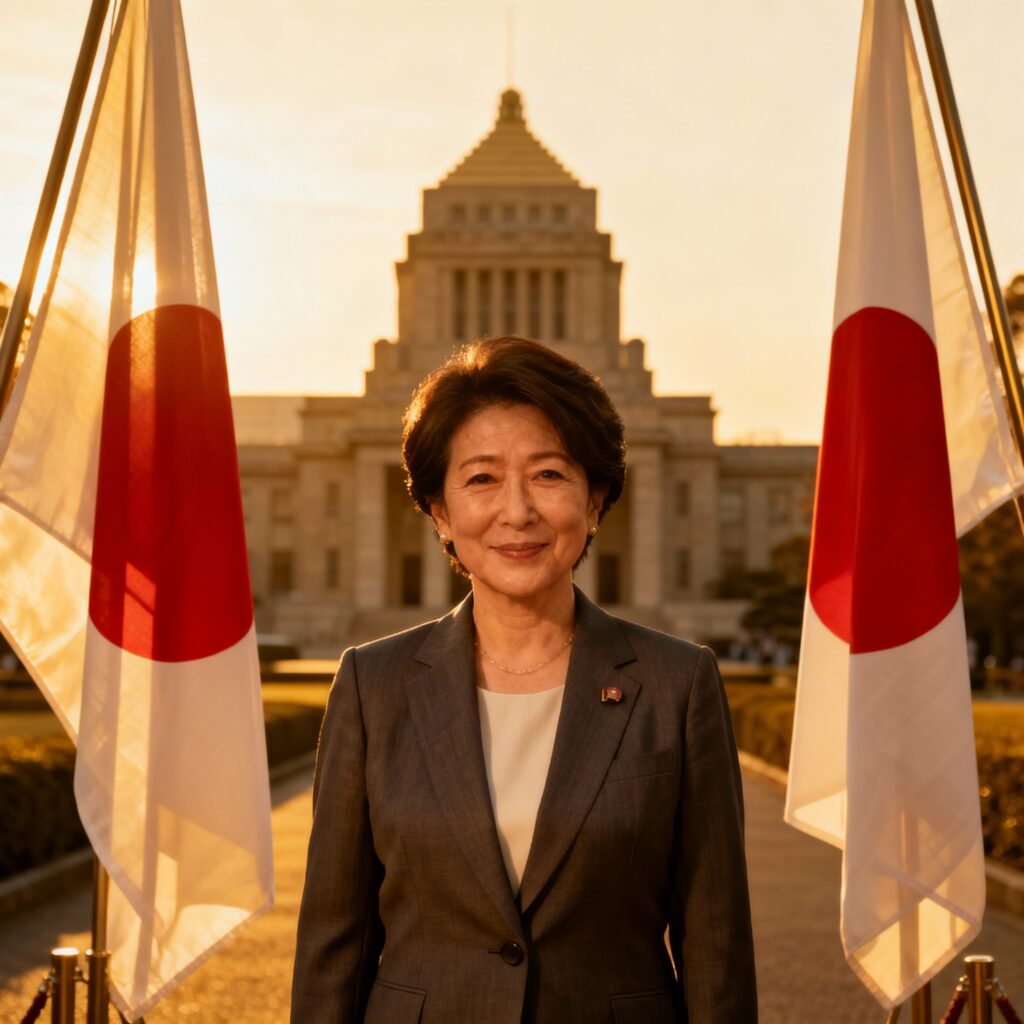
Since Japan began appointing Prime Ministers in the 1880s, every single leader has been male, making Takaichi’s imminent confirmation by parliament on October 15, 2025, a truly historic moment. However, this remarkable achievement comes with profound complexities and contradictions. While Takaichi’s rise represents a monumental step forward for female representation, her staunchly conservative ideology and opposition to progressive gender policies have sparked intense debates about whether her leadership will genuinely advance women’s rights.
The Iron Lady of Japan: A Political Phoenix Rises
The journey to Japan’s first female PM has been anything but straightforward for Sanae Takaichi, whose path to power embodies both persistence and political evolution. Born in Nara Prefecture in 1961, Takaichi’s background defies traditional Japanese political stereotypes, emerging from a non-political family where her father worked in manufacturing and her mother served as a police officer.
Unconventional Beginnings: Before entering politics, Takaichi led a remarkably diverse life, which included stints as a heavy metal drummer, reportedly breaking drumsticks during vigorous performances, a scuba diving enthusiast, an automobile aficionado who cherished her Toyota Supra, and a television host. This eclectic background provided her with a unique perspective on Japanese society and popular culture.
Political Awakening: Takaichi’s political consciousness emerged during the 1980s amid heightened US-Japan trade tensions. Determined to understand American perceptions of Japan, she worked in the office of Pat Schroeder, a feminist congresswoman known for her critical stance toward Japan. This experience profoundly shaped her worldview, reinforcing her belief that Japan needed stronger self-assertion on the global stage.
Parliamentary Journey: After an unsuccessful electoral debut in 1992, Takaichi won her first parliamentary seat in 1993, beginning what would become an 11-term career as a Member of Parliament. Her rise through LDP ranks accelerated under the mentorship of former Prime Minister Shinzo Abe, whose conservative vision and “Abenomics” policies became central to her political identity.
The Margaret Thatcher Inspiration: Takaichi has consistently drawn inspiration from former British Prime Minister Margaret Thatcher, embracing comparisons to the “Iron Lady” and advocating for free-market economics combined with strong national defence. Her victory in the LDP leadership contest, after two previous unsuccessful attempts in 2021 and 2024, demonstrates remarkable political resilience, ultimately securing 185 of 341 votes in a decisive runoff against Shinjiro Koizumi.
Breaking the Ultimate Glass Ceiling: Five Historic Barriers Shattered
The elevation of Japan’s first female PM represents the culmination of breaking multiple interconnected barriers that have historically excluded women from Japanese political leadership.
Barrier 1: Party Leadership Gender Exclusion
Takaichi’s election as LDP president makes her the first woman to lead Japan’s dominant political party in its 70-year history. The LDP has governed Japan for nearly the entire post-World War II period, making its leadership one of the most exclusive male preserves in global politics. Her victory required overcoming deep-seated institutional biases and demonstrating exceptional political skill to navigate the party’s complex factional dynamics.
Barrier 2: Prime Ministerial Gender Precedent
No woman has ever served as Japan’s Prime Minister since the position’s establishment in the 1880s, making Takaichi’s impending appointment a genuinely unprecedented achievement. This barrier has been particularly resistant to change because the Prime Minister’s role demands commanding respect from Japan’s male-dominated corporate, bureaucratic, and military establishments.
Barrier 3: Conservative Party Female Leadership
Takaichi’s success within the LDP’s conservative wing demonstrates that female politicians can achieve prominence even in ideologically traditional political environments. Her alignment with right-wing policies while maintaining a female identity creates a unique political profile that challenges conventional assumptions about women’s political positioning in Japan.
Barrier 4: Age and Experience Recognition
At 64, Takaichi has overcome ageism that often affects female politicians more severely than their male counterparts. Her extensive ministerial experience, including roles as Economic Security Minister and Internal Affairs Minister, provided the credibility necessary to compete with younger male rivals.
Barrier 5: Coalition Building Across Gender Lines
Takaichi’s ability to secure support from key male powerbrokers, particularly former Prime Minister Taro Aso, illustrates her capacity to build coalitions across gender divides. This political skill was crucial for overcoming the informal networks and mentorship systems that have historically favoured male candidates.
The Gender Paradox: Progressive Symbolism, Conservative Substance
Perhaps the most fascinating aspect of Takaichi’s rise to Japan’s first female PM is the inherent contradiction between her symbolic significance for gender equality and her substantive policy positions on women’s issues.
Opposition to Gender-Progressive Policies: Despite her historic achievement, Takaichi has consistently opposed many policies typically supported by women’s rights advocates. She remains a vocal opponent of dual-surname laws that would allow married couples to maintain separate surnames, arguing that such reforms “may destroy the social structure based on family units”. Ironically, Takaichi herself uses her maiden name despite being twice married.
Conservative Family Values: Takaichi’s ideology emphasises traditional family structures and has opposed same-sex marriage legislation and comprehensive LGBTQ+ rights protections. Her stance places her at odds with many younger Japanese women who increasingly support progressive social policies.
Expert Analysis: Political scientists have noted this paradox, with Temple University’s Jeff Kingston observing that Takaichi “doesn’t have a very positive track record on gender issues, on family-friendly policies, women’s empowerment”. Some experts describe her as an “honorary male figure” who achieved success by “accommodating our male-dominated society as much as possible”.
During her 2025 campaign, Takaichi attempted to address gender concerns by promising Nordic-like female representation in her Cabinet and LDP executive committee, suggesting potential evolution in her approach to women’s political participation.
Economic Vision: Abenomics 2.0 and Market Response
Takaichi’s economic platform represents a continuation and expansion of her mentor Shinzo Abe‘s policies, promising an “Abenomics 2.0” approach that has generated significant market enthusiasm while raising concerns about fiscal sustainability.
Market Euphoria: The announcement of Takaichi’s LDP victory triggered immediate positive market reactions, with the Nikkei 225 index surging 4.75% to close above 47,000 for the first time in history. Investors welcomed her pro-business stance and promises of increased government spending, with gains concentrated in real estate, technology, and heavy industry sectors.
Pro-Growth Spending Agenda: Takaichi advocates for aggressive fiscal stimulus, higher government investment, and reduced borrowing costs to stimulate economic growth. Her approach combines tax cuts, subsidies, and expansionary spending designed to address Japan’s persistent deflation and wage stagnation issues.
Bank of Japan Policy Criticism: She has criticised recent interest rate hikes by the Bank of Japan and signalled a return to ultra-loose monetary policy to support household spending and business investment. Despite initial market enthusiasm, some economists warn that Takaichi’s spending surge could worsen Japan’s already massive debt burden, currently at 260% of GDP, and potentially weaken the yen further.
Foreign Policy Hawks: Defence, China, and Regional Tensions
Takaichi’s approach to international relations reflects her nationalist ideology and commitment to transforming Japan into a more assertive regional power.
Constitutional Reform Advocacy: As a long-standing proponent of revising Japan’s pacifist constitution, Takaichi represents a significant shift toward normalised military capabilities. She has consistently advocated for removing constitutional constraints on Japan’s Self-Defence Forces and enabling full collective security participation with allies.
China Containment Strategy: Takaichi is recognised as a “China hawk” who advocates for tougher economic and security measures against Beijing’s regional expansion. Her approach emphasises strengthening partnerships with India, Australia, and Southeast Asian nations to balance Chinese influence in the Indo-Pacific region.
Yasukuni Shrine Visits: Her history of visiting the controversial Yasukuni Shrine, which honours Japan’s war dead, including convicted war criminals, has consistently strained relationships with South Korea and China. These visits symbolise her revisionist approach to wartime history and could complicate regional diplomatic efforts.
Alliance Strengthening: Despite potential friction over trade issues, Takaichi strongly supports the US-Japan security alliance and has pledged to work closely with the Trump administration on regional security challenges.
Domestic Challenges: Coalition Politics and Opposition Dynamics
The path to confirming Japan’s first female PM faces significant political obstacles that could complicate Takaichi’s transition to power and early governance effectiveness.
Coalition Partner Concerns: The Buddhist-backed Komeito party, the LDP’s traditional coalition partner for 26 years, has expressed “significant worries and concerns” about Takaichi’s ultra-conservative positions. Party leader Natsuo Yamaguchi warned that their alliance cannot continue unless her viewpoints are reconsidered, potentially threatening the coalition’s stability.
Parliamentary Math Problems: Following consecutive electoral defeats, the LDP-led coalition no longer holds majorities in either house of parliament, forcing reliance on opposition cooperation for legislative passage. This minority government status severely constrains policy implementation capabilities and increases political vulnerability.
Public Trust Restoration: The LDP faces a fundamental credibility crisis following multiple corruption scandals and declining living standards. Takaichi’s primary challenge involves rebuilding voter confidence while navigating Japan’s economic and demographic decline.
International Implications and Gender Equality Impact
Takaichi’s ascension to Japan’s first female PM carries implications extending far beyond Japanese domestic politics.
Asia-Pacific Female Leadership: Takaichi joins a select group of female leaders in Asia-Pacific, though her conservative ideology contrasts sharply with the progressive approaches of other regional female leaders. Her approach will test whether personal diplomatic relationships can overcome potential trade and defence cost-sharing disagreements with the Trump administration.
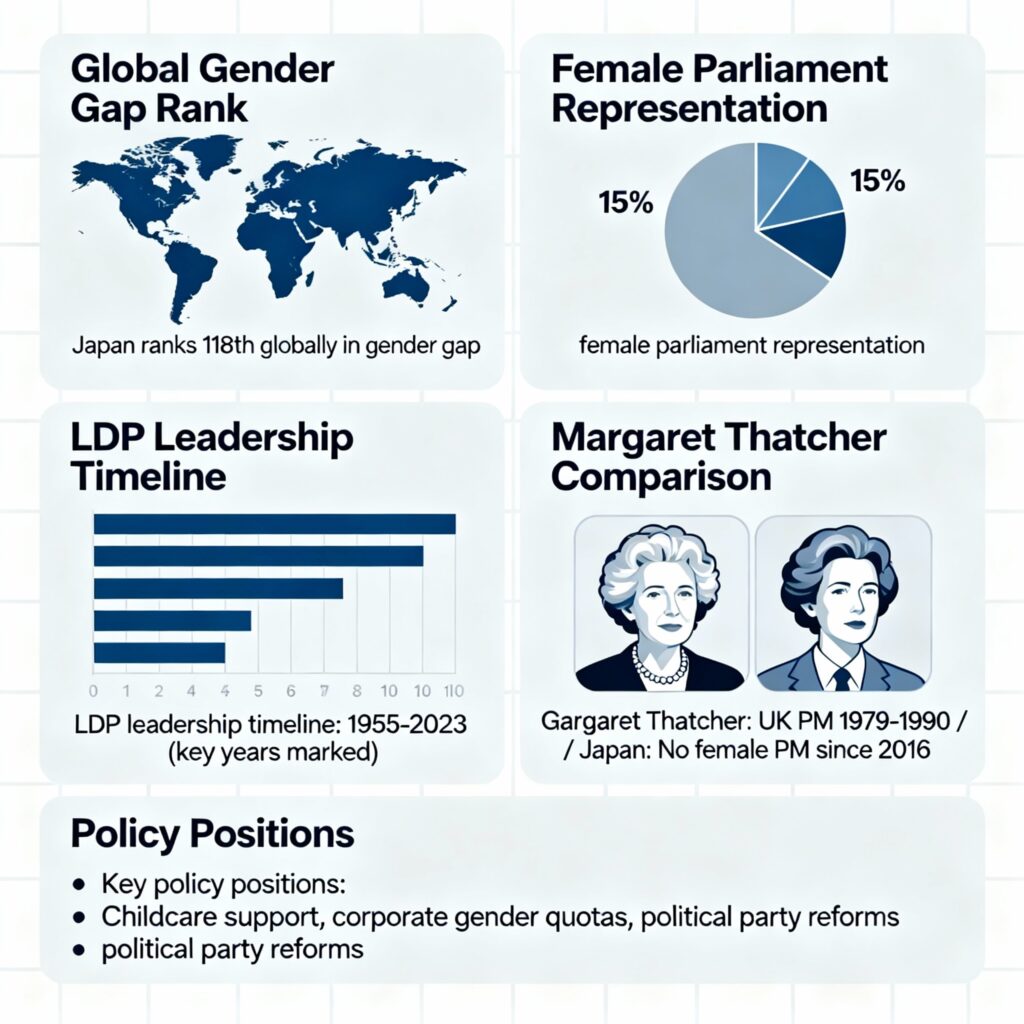
Global Gender Gap Reality: Japan’s ranking of 118th out of 146 economies in gender equality reflects systemic challenges that extend far beyond political leadership. The country performs particularly poorly in political empowerment metrics, with only 15% female parliamentary representation.
Regional Tensions: Beijing will likely view Takaichi’s leadership with concern, given her history of provocative statements and shrine visits. Her premiership could exacerbate regional tensions and complicate multilateral cooperation efforts on trade and security issues.
Conclusion: A Historic Moment with Complex Implications
The imminent confirmation of Sanae Takaichi as Japan’s first female PM represents a genuinely transformative moment in Japanese politics and Asian regional leadership. Her achievement shatters a glass ceiling that has endured for nearly 150 years, providing symbolic inspiration for women across Japan and beyond who aspire to political leadership.
However, Takaichi’s ascension embodies the complex contradictions inherent in political progress. While her elevation represents unprecedented female empowerment in Japanese politics, her conservative ideology and opposition to progressive gender policies highlight the distinction between symbolic representation and substantive policy change. Her success demonstrates that women can achieve ultimate political power while maintaining traditional social values, challenging simplistic assumptions about gender and political ideology.
The challenges awaiting Japan’s first female Prime Minister are formidable: restoring LDP credibility, managing coalition politics without a parliamentary majority, addressing economic stagnation and demographic decline, navigating intensifying regional security tensions, and building productive relationships with the Trump administration.
Perhaps most significantly, her premiership will test whether breakthrough female representation can coexist with traditional ideological positions, potentially providing a new model for women’s political advancement in conservative societies. The world will watch closely to see whether Japan’s Iron Lady can successfully navigate the complex challenges of 21st-century governance while maintaining the political coalition that brought her to power.
As Takaichi prepares to assume the mantle of leadership, her historic achievement serves as both an inspiration and a reminder that political progress often comes in unexpected forms. The breaking of Japan’s ultimate glass ceiling represents a fundamental shift in what is possible for women in Japanese politics and society, even if it doesn’t unfold exactly as gender equality advocates might prefer.